


8 HOURS TO THE END OF THE WORLD
It is May 23, 1993. The Lady of the Past, leader of the pyramid cult “Present”, has just washed her underwear and, in the process, erased the brains of all humanity. Only you, a robot built over 30 years from the remains of a 90s soap opera actor, can stop her. But you are not alone. You have Two More, a benign tumor, inexplicably powerful and with a life of its own that lives inside you.
Your mission is to travel to the past, exactly 8 hours before the apocalypse. Each level (Biome) represents an hour in this lady’s schedule before she erases our memories. You will have to sabotage her day: from her walk in the park to her meal at an all-you-can-eat buffet... The clock is ticking, Future Knight. Can you save the future before it becomes the past?
GAME FACTS
Release Date: 8/13/2026
MSRP: $14.99
Publisher: Aeternum Game Studios
Developer: Aeternum Game Studios
Platforms: Xbox Series X/S, PlayStation 5, Switch 1/2, PC/Steam
Played on: PlayStation 5
DEVELOPER HISTORY
Future Knight was developed as a collaborative effort between Studio Koba, developer of the synthwave action-platformer Narita Boy, and Aeternum Game Studios, best known for metroidvanias like Aeterna Noctic and Eden Genesis.
Narita Boy by Studio Koba
Released in 2021, Narita Boy is a retro-futuristic action-adventure game set inside a 1980s arcade console realm called the “Digital Kingdom.” Players wield the Techno-Sword to fight off corrupted code (the Stallions) while unearthing the digital memories of the game’s Creator. It heavily relies on retro-tech lore, synthwave music, and detailed 2D pixel art styled like a curved CRT television display.
Reactions were generally positive, sitting around a mid-70s Metacritic score. Critics widely praised its extraordinary art direction, synth soundtrack, and world-building. However, reviews frequently dinged its repetitive hack-and-slash combat and occasionally confusing backtracking or cryptic level layout.
Aeterna Noctis by Aeternum Game Studios
Released in late 2021, Aeterna Noctis is Aeternum’s flagship and most famous title. It is a massive, hand-drawn 2D Metroidvania following the King of Darkness, who is locked in an eternal war against the Queen of Light. The game emphasizes punishing precise platforming, rapid dash mechanics, complex boss fights, and a vast interconnected world spanning 16 distinct zones.
The game’s reception was highly polarized, averaging mid-70s scores overall. Hardcore Metroidvania enthusiasts lauded its deep world design and brutal precision platforming challenges reminiscent of Hollow Knight or Celeste. Mainstream critics and casual players were more mixed, faulting its initial extreme difficulty spikes, high-friction traversal, and occasional performance issues at launch.
GAMEPLAY EXPERIENCE
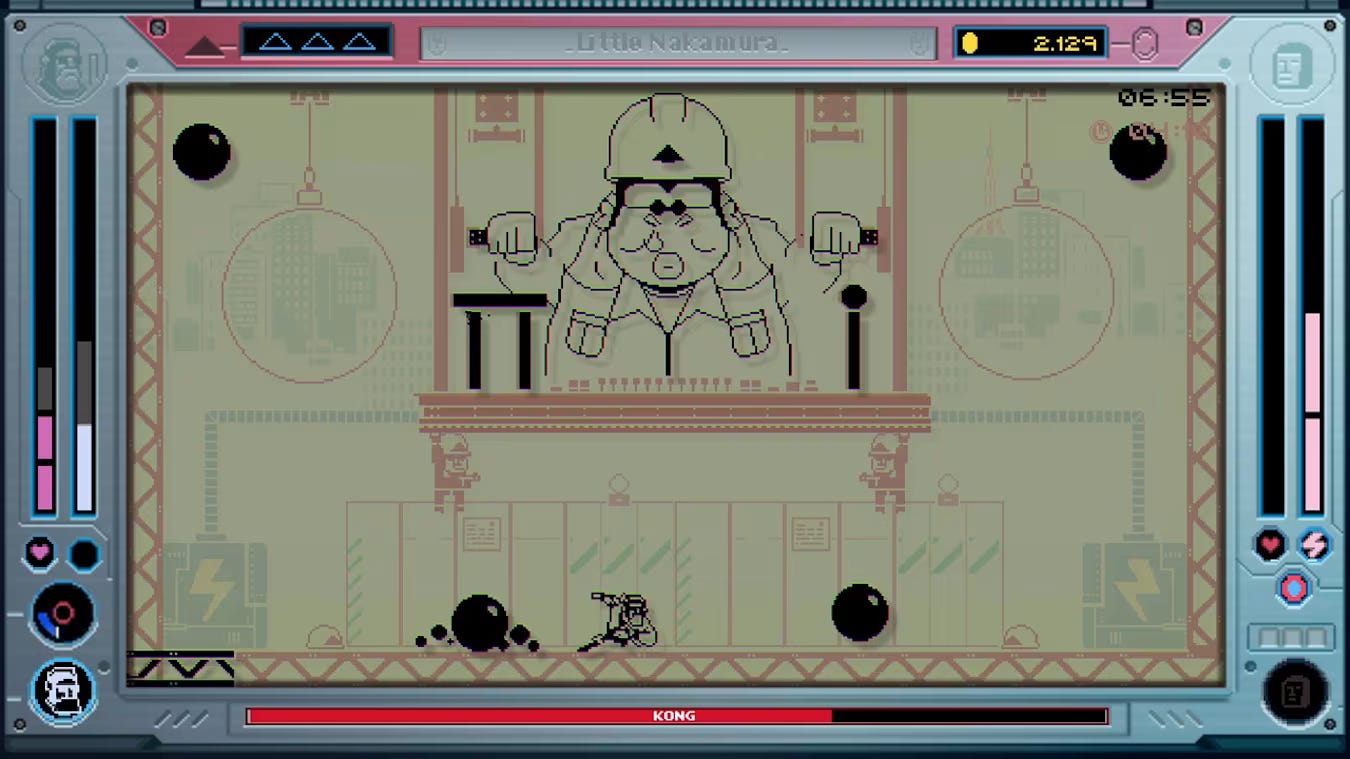
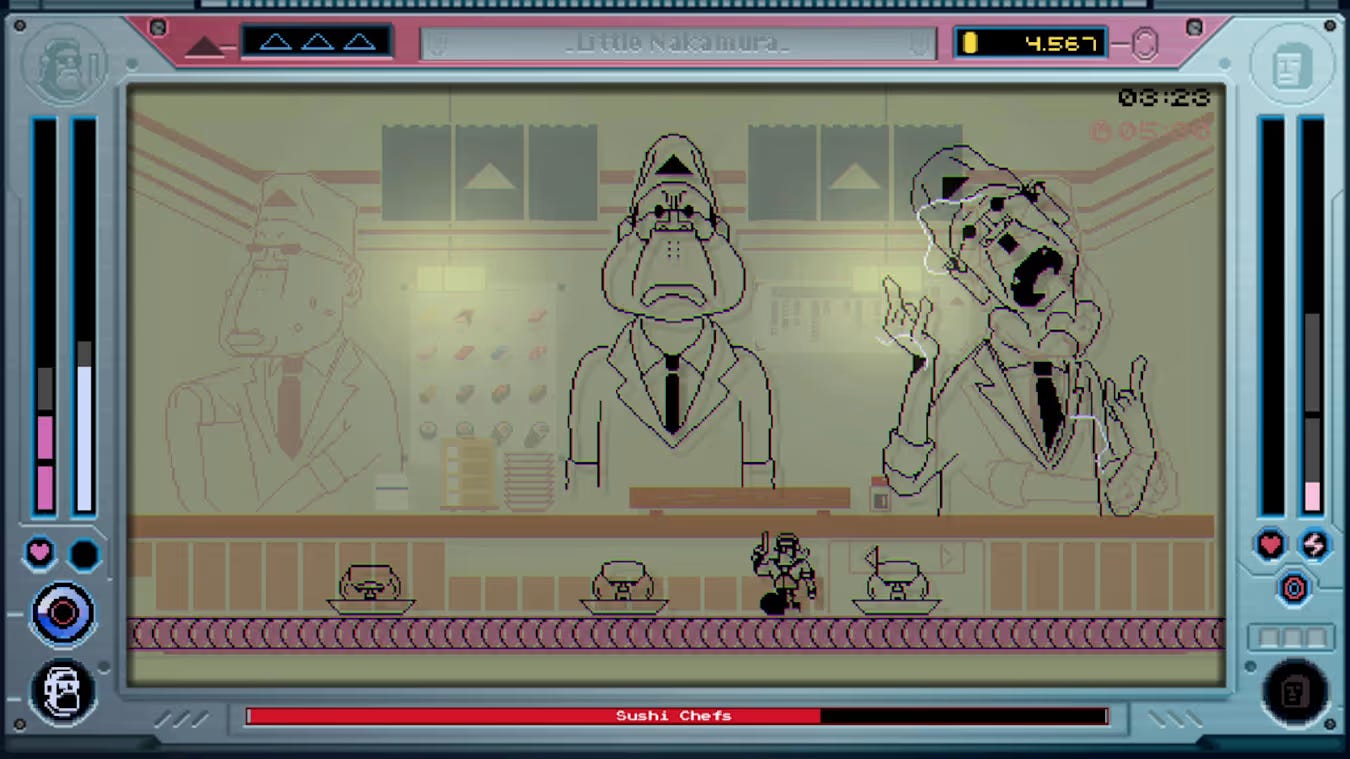
Still pictures do not do Future Knight justice. While its visual-style is clearly inspired by classic LCD games, like Nintendo’s Game-and-Watch series and Tiger LCD games, any comparison ends there. Future Knight is wild, weird and wonderful, and its gameplay is surprisingly deep, given its LCD-inspirations.
First of all, the whole thing is wonderfully unhinged, in the best possible way. The story is what I would describe as “Japanese-weird”, and I mean that in the most respectful way possible. If you read the game’s story at the beginning of this post, you will probably see what I mean by “wonderfully weird”.
Then its game characters and graphics are similarly strange but great. Your character, Future Knight, appears to be some mechanical suit of armor and your actual character is a blob-looking thing that the game describes as “a benign tumor.” So, you essentially play as a stomach tumor fighting crime in a suit of armor that looks like a drugged-out Santa Claus with a gun.
Then all the enemies, bosses and characters can be seen ghosted in the background, kind of like how old LCD games actually worked, so you kind of get a sense of what may be coming, but it rarely unfolds exactly the way you expect, at least until you see all the enemy varieties the game has to offer (which was honestly much more than I expected).
Your character itself, is kind of setup like Blaster Master, where your suit has its own life bar, and you need to exit once in a while to traverse specific sections, but of course the tumor character is extremely fragile: one hit and you’re dead. But, the tumor at least has a very powerful attack that can one shot most enemies, however it then needs to be recharged in the suit. The suit has its own health as well, which recharges as long as the tumor is outside of the suit. This means you will find yourself exiting the suit and exposing your character to enemies and potential death to recharge the health of your suit and continue fighting; it’s a great detail that adds a lot of strategy to the gameplay.
Each stage is largely linear, but you do have collectible items in each stage that are required to get the true ending of the game, which adds to its replay value, since you are unlikely to get them all the first time you play through a stage.
The controls are tight and you have enough abilities to keep things interesting as you make your way through the various stages to stop The Lady of the Past. Between chapters you see additional cutscenes that add to the story (and are all delightfully unhinged).
REVIEW SCORE: 9/10

Overall, Future Knight is truly outstanding. I love the entire vibe of the game, the graphics are great, the sound and music are both odd and outstanding, the controls are varied and tight, and the story is wonderfully weird. Even though the visuals are inspired by the crappy LCD games of old, there is no other comparison between them. Future Knight is one of my biggest surprises of the year so far, and I’m so glad I took a chance on it. I highly recommend you check it out.
GAMEPLAY
You can watch my beginning gameplay on PS5 in the video below.